← Blog from Guindo Design, Strategic Digital Product Design
Rashomon: the story that kills your product
Kyoto, 12th century. In a secluded forest, a bandit is accused of killing a feudal lord and assaulting his wife. Each of those involved tells a different version of what happened that day: the bandit, the woman, the feudal lord himself, who also testifies, summoned through a medium, and a woodcutter, the only one who saw the events with his own eyes, who also harbours something he told no one. None of the versions is a lie, but none of them quite match.
This story, of the crime and its irreconcilable testimonies, comes from a tale by the Japanese writer Ryūnosuke Akutagawa from 1922. But when Kurosawa he took it to the cinema in 1950, giving it the title of another different and earlier story by the same author: one set at the ruined gate of Kyoto where two survivors take shelter from the rain and end up telling the story to a third. He merged both tales into a film that won the Golden Lion in Venice and opened the doors of the West to Japanese cinema. It gave its name to that situation in which several people describe the same event in different ways, each credible, each self-interested: the Rashomon effect.
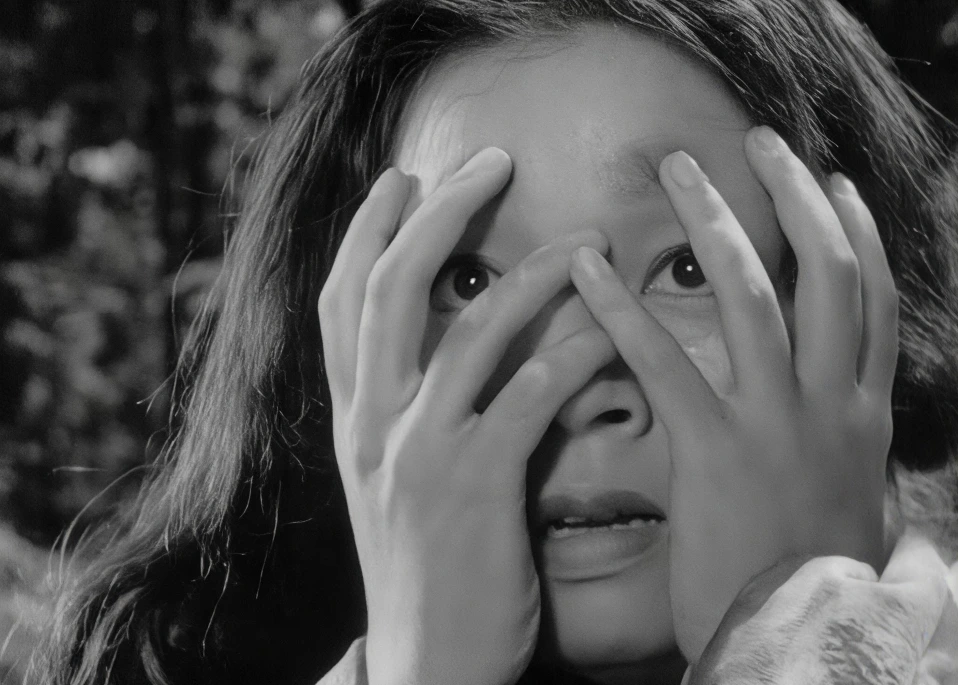
For decades we have used it to talk about unreliable witnesses, but it also happens in the most everyday situations, especially among groups of friends. Years ago I was nearly about to burn down some friends' house trying to put out the methylated spirit from a fondue that had spilled. In my head the scare lasted barely a few seconds, but every time we get together, the story gets a bit bigger, and it is already a cause for guaranteed laughs, even though each of us tells it differently.
Today, that biased and amplified view of any event moves to another scale. We live in a tribalised society, and platforms feed it directly. On YouTube, almost half of the recommended videos are similar to the source video. On Facebook, Twitter, Gab and Reddit, the same affinity-based grouping mechanism underlies the echo chambers. Objective reality has ceased to operate as an arbiter and we no longer expect facts to settle the argument.
In digital product, this is almost a given. The entire user research discipline relies on the fact that there is not a single truth about the user, but several, conflicting with each other. In any team, that multiplicity operates on a daily basis. The designer defends one interpretation of the problem, the user has a completely different one in their head, and marketing builds a third narrative to sell the promise.
Value was never an objective fact
Within any product-building team, this discrepancy already exists before anyone names it. What the team believes a feature solves and what the user actually does with it are rarely the same story; it is a classic in the discipline. And it is not a communication failure that can be fixed with better documentation, since even this is assimilated in a biased way.
And what does the user actually need? Most of us working in product design have been trained assuming that they compare and buy features, when in reality they are looking for meaning: control, status, belonging, saving effort. That is why more features do not automatically produce more perceived value. The courage was never an objective fact about the product, it was always a negotiation of narratives that until now took place behind closed doors within organisations.
That very dispute over defining what your product is is no longer fought only within your company. Yelp has been dealing with for over a decade bought or incentivised reviews, and the damage does not stop at that product. As soon as the buyer suspects that some reviews are fake, they also stop trusting the genuine ones and the entire system gets contaminated.
The advantage no longer lies in the features
Building costs less and less thanks to generative AI, which is why achieving feature parity with the competition is no longer an advantage. If anyone can build the same as you in weeks, the advantage shifts to who best manages value perception and trust around what it builds.
Mind you, this is not a licence to live on rhetoric alone, and I am reminded of the case of Humane AI Pin, a gadget that had a perfect narrative: founders who came from designing the iPhone, hundreds of millions in funding, the promise of replacing the mobile phone with an AI pin. When it reached people's hands, it overheated, the battery lasted a couple of hours and it barely did what it promised. Real, unbought reviews tore it to shreds in a matter of days. A narrative without a product behind it doesn't survive either.
Your product competes within an environment where the very reality of what is valuable is actively being narrated, for your team, for your users, and for people with no interest whatsoever in telling the truth.
What can we do about it
In your roadmap, do not assume that more features mean more value. For each feature, write explicitly what you think it is going to mean for the user, not just what it does. For example, you can ask designers and users to score various proposals for the same concept separately and use the discrepancy between them as a decision criterion, instead of treating it as noise to be eliminated.
Measure how well your team manages its own disagreements, just as you would measure any other product risk. It is not something that is resolved in a single meeting and that is that. The teams that make good use of different perspectives build better; those that don't, they finish stereotyping the user under deadline pressure.
When reading your growth metrics, bear in mind that some of that signal may be bought noise. Reviews and ratings not only influence what your user decides: they also influence what your own product team decides when prioritising what to build, and that includes what you see in app stores like the App Store or Google Play. If you don't filter out that noise, you end up making your own decisions based on data that isn't even real.
And there is something else we can do, and it is not just hide behind scepticism, but build our own system of trust instead of depending on that of the shop or the review marketplace of the day. Adding our own layer of verification, even if it is simple (feedback tied to actual product use, rather than someone who simply decides to leave an opinion) without hiding plurality behind an average rating. A 4.2 out of 5 on G2 or Capterra completely erases the nuance of discrepancy. We can group opinions by reason instead of averaging them: who values your product for A, who values it for B. Furthermore, anyone who is still evaluating your product, on a free trial or comparing alternatives, also needs to see that plurality, rather than an average that does not tell them whether it will fit their specific case. A product that shows why people disagree inspires more trust than one that glosses over it.
To compete is for your version of the truth to survive
The Rashomon effect started as a way of explaining why four people see the same thing in four different ways. Today it describes almost literally our daily lives, and what it means to compete in a market saturated with excellent products. It is no longer enough to have the best product, it is about getting your version of the truth about the problems your product solves to survive all the others competing for the same space.
And one last thing, to be consistent. All of the above is, obviously, my account of events, embellished with a good film classic, which always goes down well.