← Blog from Guindo Design, Strategic Digital Product Design
Using comics to communicate user test results
It is often difficult to explain in a report or presentation what happened during a user test. There are many nuances that are lost: expressions, gestures or reactions that help to better understand what happened. And sometimes, even if it is politically incorrect, a simple grimace communicates more than a “the user made a confused face”.”.
For example, in a presentation it is much more eloquent to show a scene of confusion directly than a slide full of text. The problem is that test participants must remain anonymous.. This means that we cannot show their faces and reactions as they happened, even though it is precisely those reactions that best convey what happened.
This is where comics become an interesting alternative.
Comics as a serious tool
Strange as it may sound, the use of comics to communicate is growing in business and even government environments in the US.
- It is a familiar and close medium for most audiences.
- It is not as intimidating as a dense report or a text-heavy presentation.
- It is used to explain complex ideas such as sequences or processes.
- It uses narrative and visual language that is accessible and easy to follow.
At Boxes and Arrows, Rebekah Sedaca of Capstrat published a highly recommended article: Comics: Not Just for Laughs!, where he tells how they incorporated comics into their user experience deliverables. In his experience, customers understood better what had happened in testing, were more engaged in meetings and the conversations were more productive than when they only received a written report.
How to create a comic for a usability report
Sedaca proposes a simple way to do this:
- Define communication objectives. Write a short script in paragraphs for each situation, without worrying about the images.
- Turn the script into scenes. Think about how to translate each concept into a sequence of vignettes showing the essentials.
- Attention to detail. Add expressions and gestures, incorporate interface elements and ensure that each scene is recognisable.
- Assemble the complete strip. Bring all the scenes together into a visual narrative that summarises what happened in the test.
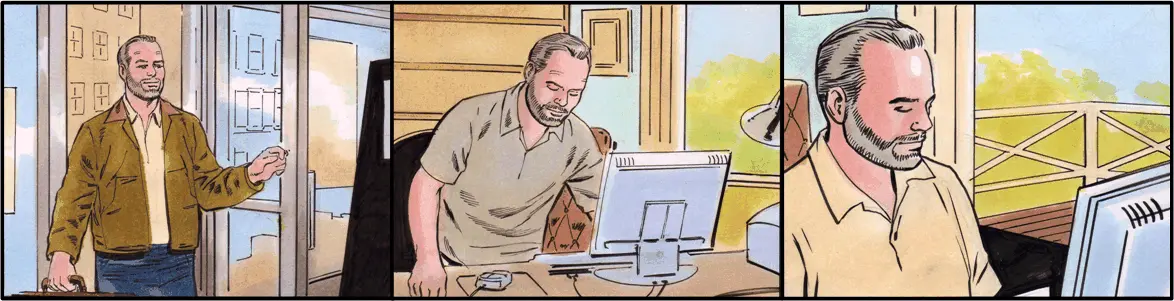
The comic format, used intentionally, can be a very effective tool for conveying usability findings, communicating better with customers and reinforcing understanding of what happens in a user test.