← Blog from Guindo Design, Strategic Digital Product Design
The theremin: the first intangible interface
By definition, an interface is an element that always connects, fits or combines two (or more) things or people. Designing an interface therefore means designing that intermediate space that mediates between different worlds.
For decades, interaction designers have dreamed of invisible interfaces, where no physical device such as a mouse or keyboard is needed. Today we are familiar with technologies such as touch screens, motion sensors or virtual reality, which invite us to interact with machines in a more natural way. What is surprising is that this ideal was not born in Silicon Valley, but in Russia more than a century ago, and it was born in the field of music.
Lev Sergeyevich Termén, known in the West as Léon Theremin, was born in St. Petersburg in 1896. Fascinated by both science and music, he devoted his youth to the cello, physics and electricity. In 1919, while experimenting with electronic oscillators, he came across an unexpected discovery that led him to create an instrument that responded directly to human gestures in the air. He called it the eterophone, although the world would eventually come to know it simply as the theremin.
How the theremin works
The basic principle behind the device is that the human body generates distortions in the electromagnetic field of an electric current. The device has two antennas, one to pick up changes in the oscillator that generates the tone, and one to pick up changes in the volume. Inspired by the movements of conductors, the player does not physically play the instrument, but it is his proximity and hand posture (in the air) that generate and define the sound of the instrument.
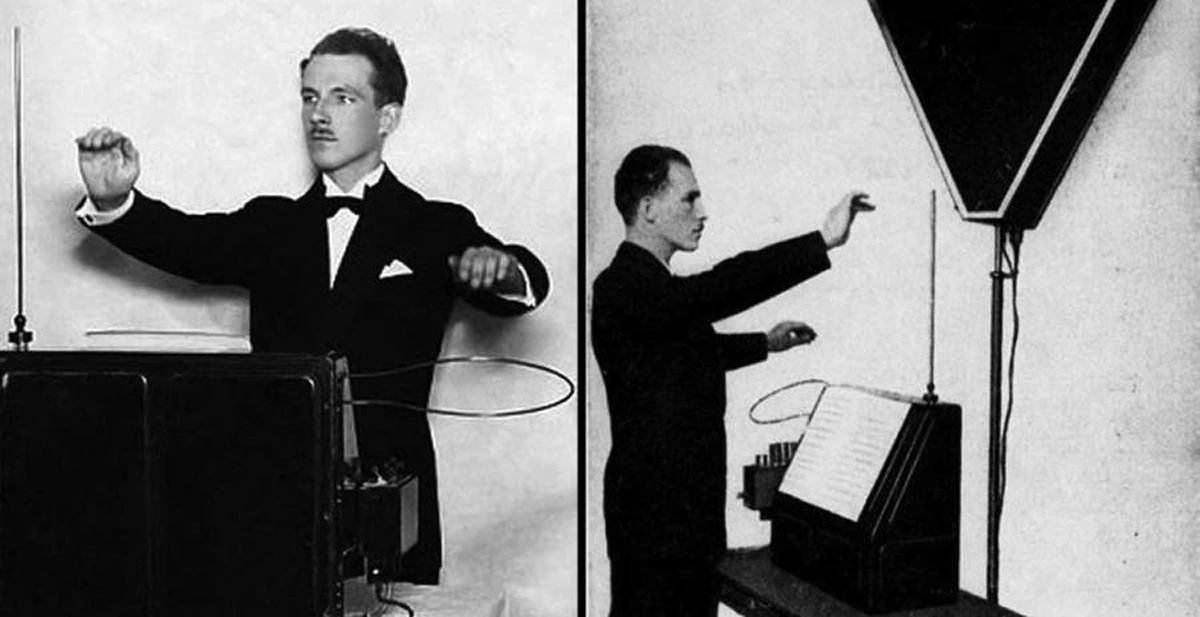
The first contactless interface
Without intending to, Theremin had invented more than just a musical instrument. His was the first device in which human gesture interacted with a machine without the need for physical contact. What seemed almost like magic at the time was, in reality, an intangible interface: a way of translating movement and proximity into machine-understandable information.
This discovery opened a door that we are still exploring today. The same principle that made a theremin sound is behind motion sensors, gesture control systems in virtual reality or even the proximity detectors that mobile phones carry in your pocket. In 2020, a century after its invention, Moog celebrated the anniversary with the Claravox Centennial, a special edition theremin that combined classic aesthetics with the latest digital technologies.
Beyond the music, the theremin is a reminder that interfaces need not be buttons, keys or screens.