← Blog from Guindo Design, Strategic Digital Product Design
The Russian
A few weeks ago, we had the opportunity to attend the open days of the ESCAC, the Escuela Superior de Cine de Cataluña. Visiting the workshops and studios was like a journey back in time, taking us back to our days as art students. The visit was also like a master session to review the most basic concepts of the creation and distribution of a film.
One of the details that caught our attention was the use of fully analogue cameras in the first years of the students' training. The school has several Krasnogorsk-3, or more popularly known as “The Russian”. This is a 16 mm film camera manufactured by KMZ during the Soviet Union era, widely used in internships and independent films due to its robustness and low cost. The camera is so analogue that its motor is wind-up.no batteries are needed, as it operates completely mechanically.
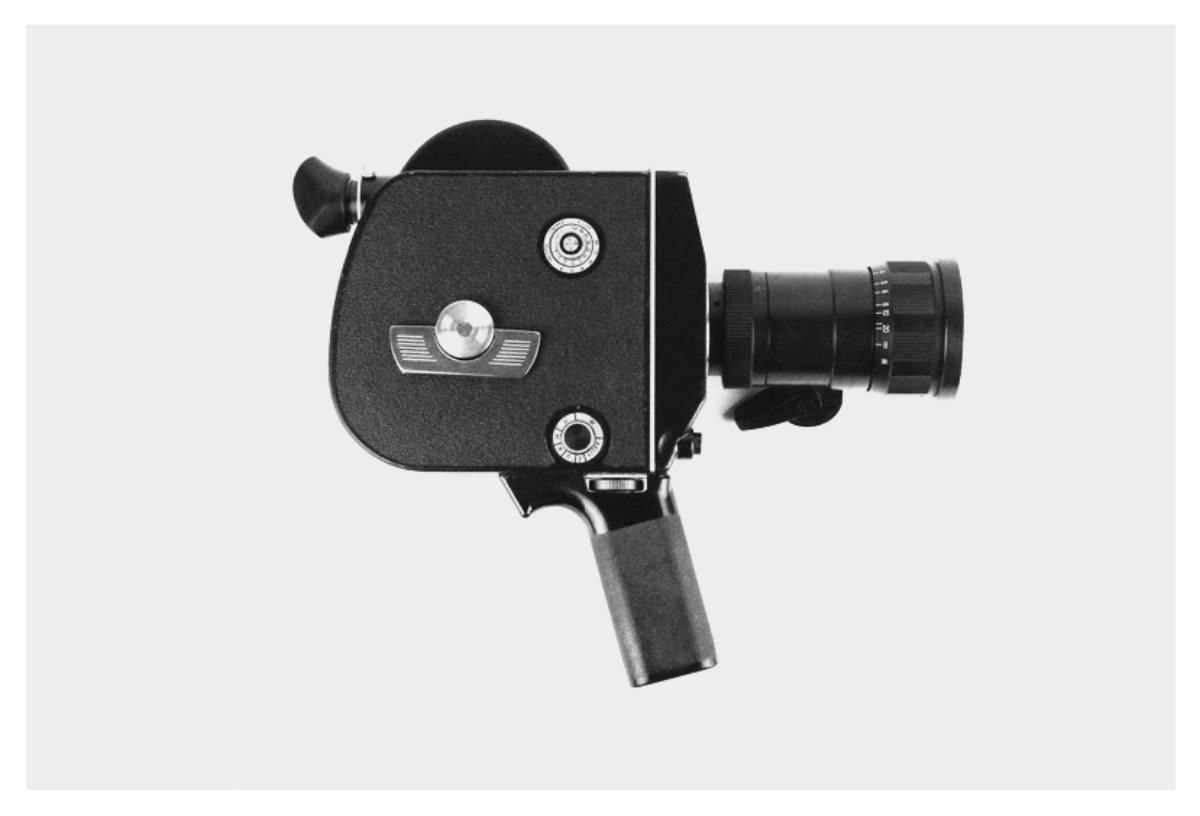
And why use a 1971 camera in 2025?
Precisely because not a perfect tool. And that makes it an ideal tool for teaching the classical filming method. The idea is that the students plan everything before filming, avoiding the improvisation typical of digital video, where everything is filmed en masse and then decided afterwards.
This camera forces us to think, to be precise and to economise.. Each roll of film is only 3 minutes long (about 30 metres), and each load of rope allows only 30 seconds of continuous filming. This requires careful preparation of each shot, careful staging and making the most of every shot.
You can't see the result immediately, as you can in the digital environment. Exposed rolls are sent to the lab to be developed and take a week to return, forcing you to rely fully on your light metering and aperture settings. The aim is to teach you how to expose a negative correctly without instant feedback, promoting greater photographic awareness.
Once the rolls have been developed (if they are not veiled, burnt or destroyed by mishandling), they are digitised so that the students can edit them. The idea is for the student to have a clear idea of the structure before arriving in the editing room.
Forming judgement vs. muddling through
This process is undoubtedly a shock for many students, who are used to recording with their mobile phones and editing videos in minutes to share them on social networks. The tools they tend to use are full of shortcuts and templates that allow you to solve quickly, but limit the ability to explore other solutions or forms of expression.
Facing the blank page is tough. And the temptation to turn to the on-duty artificial intelligence assistant to get out of it is very real. But relying on these tools to think or create can lead to a loss of cognitive abilities. Just as the overuse of machines during the Industrial Revolution reduced physical exertion and contributed, in part, to muscular atrophy.
For the first time in history, after generations of living in increasingly mentally demanding environments (which gave rise to the well-known Flynn effect, with a gradual increase in IQ), there is a risk of a cognitive sedentary lifestyles. If we delegate to technology the tasks that used to force us to think, we could be entering a phase of mental atrophy.
AI tools are a valuable aid as practical assistants: they are used to automate repetitive tasks, scale up processes or amplify our capacities.. But if we use them too much as a source of ideas or as a way of assimilating knowledge, we run the risk of confusing efficiency with real learning.
I believe that in the future, people who are able to isolate themselves from technology to think for themselves, and who can also pass on that judgement to educate others, will be increasingly valued. In design, for example, it will become crucial again teaching the fundamental principlesUnderstanding the reasons, the underlying psychology, the history, the cognitive perception... In short, mastering the deep principles that make a design effective will be a great differentiator, as it was before the era of the bootcamps.
As the world fills up with similar solutions created with pre-designed templates and resources (where anyone can create something without understanding what they have done) the ability to creating with purpose and understanding will become more valuable.
In our lives we have had the good fortune to meet many “Russians”: analogue gadgets that forced us to think. Cameras of all kinds (pinhole, reflex, Polaroid...), tools and machines for composing, replicating or mass-producing (tracing paper, engraving presses, photocopiers...). In short, junk with a very strong character, which demanded to be treated with affection.
If you have been lucky enough to meet any “Russians”, I would love to hear from you.