← Blog from Guindo Design, Strategic Digital Product Design
The infinite joke
There are books that you don't realise are about the future, until the future catches up with you. Books that are so absurd, difficult to read and, at the same time, so much fun that they hook you and force you to continue until the end, even though you know that you won't get anything clear when you finish them.
I am talking about The infinite joke (Infinite Jest) of David Foster Wallace, I read this book about ten years ago and I remember it was hard to finish, partly because of its length (more than a thousand pages), its format, with hundreds of footnotes that you have to read in order not to lose the thread, the multiple plots, characters and the time jumps. Much, much, much has been said about this book, as it is considered to be one of the hundred best novels in the English language. I doubt that I will discover anything new, but I would like to arouse your curiosity, because it is a perfect summer read.
I tend, and I suppose we all do, by professional deformation, to draw conclusions from any book, even if it is fiction. Ideas that help me to better understand the practice of my profession, society or people's behaviour with technology. Although it is fiction and not science fiction, this novel anticipates and helps to understand many of the ills of our society today. Keep in mind that it was published in 1996, when the Internet was just a baby, and that it took him five years to write it, although the first ideas for the novel were sketched out in the late 1980s.
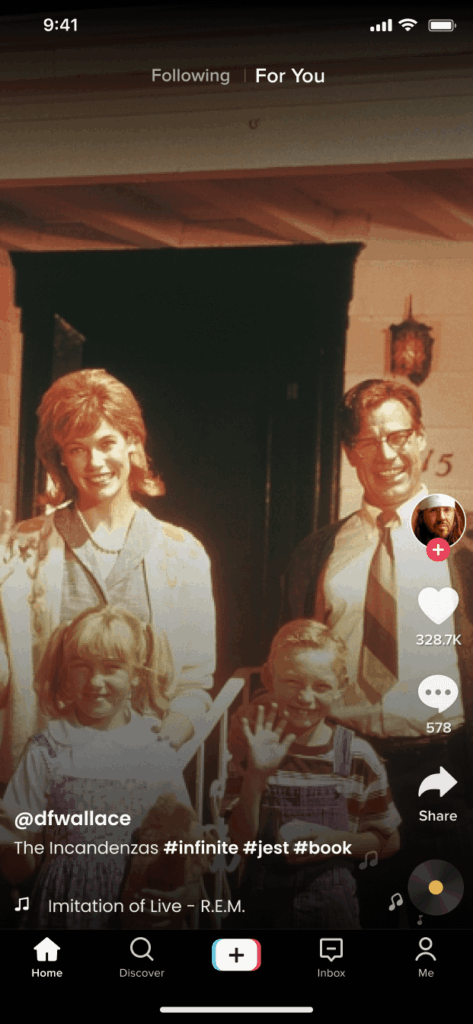
The infinite joke is set in a dystopia in which the United States has annexed Canada and Mexico (start thinking of analogies with today's political situation), provoking the reaction of various separatist movements. One of them is a group of wheelchair-bound disabled assassins from Quebec. This group has discovered that there is a film called The infinite joke that gets people glued to the TV, watching it over and over again, giving up eating and drinking until they die. If we translate this to our digital reality: social networks with infinite scroll, do you follow me?
The Quebeckers are looking for the original master of the film to copy and distribute it in the United States, convinced that a consumerist-oriented society will not resist watching it. America appears as a country willing to do anything for entertainment, which would let itself be dragged to death with pleasure in its comfortable homes. Here we can see a parallel with the recommendation algorithms on TikTok in the West versus those in China.
“This is what happens when a people choose nothing to love over each other”.
David Foster Wallace is one of the key authors of the end of the millennium for his ability to x-ray the ills of late-capitalist society and his ability to anticipating today's digital society. The film is the great symbol of the novel: it represents a subtle power that controls us through our egocentrism and hedonism. Wallace had been addicted to many things - television, drugs, alcohol and sex - and was well aware of his natural predisposition to addiction. But he also knew that it was not just personal; he thought of his whole generation: privileged people, who had had everything, and yet were sadder and more despondent than previous generations.
At The infinite joke, Wallace anticipates phenomena that are familiar to us today: Instagram filters that generate insecurity, the fear of showing ourselves without filters, and the choice of on-demand entertainment, eliminating television as the central advertising space. This is causing advertisers to look for other sponsorship spaces, even the most unusual ones:
“If there is a year of the monkey, why shouldn't there be a year of the Whopper?”
Without making you more spoilers about the novel, so much for my reading recommendation. A perfect book-brick for the summer that will provide you with very good moments, and the odd one or two. deja-vu.