← Blog from Guindo Design, Strategic Digital Product Design
Technological imposture
The use of an emerging technology is always a temptation, it is very likely to think that the «novelty» or «trendy» factor will facilitate the success of a project, or at least attract media attention, thus increasing its diffusion.
When I refer to emerging technology, I'm not talking about anything fancy, it can be simply the imposture of creating a mobile application, the use of QR codes to provide contextual information about a tourist site or simply to add an interface to any object, with the dangerous risk of falling into ridicule.
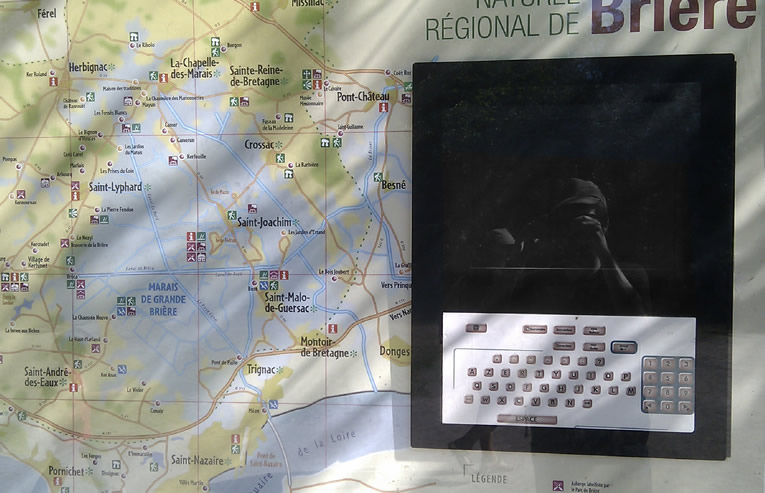
The cult of QR
Just like the embedding of interfaces everywhere, QR codes have been booming over the last few years, suddenly they were everywhere, they became very fashionable to give access to contextual information about tourist attractions, on laser-cut iron plates, carved in rocks... Sometimes I think that archaeologists of the future will interpret them as signs and indications of an alien civilisation that visited us.
Often these codes are located without instructions, cryptically, not to say in places with no 3G coverage or WIFI available. Wouldn't it have been easier to place an information panel at the point of interest? Maybe so, but then the local council would not have had access to an R&D grant, nor would it have won a prize for technological innovation in the province.
The mirage of apps
With mobile applications, ¾ of the same thing happens. The development of a specific application for a device can have many benefits, since among many reasons it facilitates access to the task or service and in principle makes it more agile and powerful, since it is optimised for the device and makes the most of the device's resources to offer or optimise functionalities. But on many occasions, perhaps the majority, the motivations for developing an application are far from improving the service experience and are simply subterfuges for attracting new users, with the intention of introducing a foot in their device and ending up offering direct access to functionalities very similar to those that can be found on the website, not to mention embedded replicas of the same.
We recently had a potential client visit us, who came with very clear ideas and the intention to develop an app. This particular person had no experience with digital projects, but had heard that an app was «the thing to do now». When I asked him about his requirements and needs, it was honestly nothing that couldn't be solved better, faster and cheaper with a landing page or flyers.
The responsibility of the design profession
As professionals, even if it is tempting to work on a project with a new technology or technique, we are obliged to guide the client with the best solution according to their needs and possibilities. If we know our trade well, it is not ethical to sell a trendy technological solution for a need that can be solved in a simpler and more efficient way.
In recent quarters in the study, the projects we have had the opportunity to work on and which have had the best results and customer satisfaction have been those that are based on a consolidated and familiar technology for users:
- An SMS communication flow for emergency situations.
- A mailing list to request accommodation via a single email address.
- Distribution of automatic PDF reports by email.
Interaction design should not be limited to just one interface, but should analyse the service as a whole to find the small micro-interaction that makes the whole thing move with minimum effort. As the people at Cooper recently said in an article: The best interface is no interface.