← Blog from Guindo Design, Strategic Digital Product Design
Skeuomorphic AI: your tool is your cage
We've had months of a new wave of design tools that has the whole community excited, I'm talking about the AI features from Figma, or tools such as Lovable, v0, Magic Patterns or the design mode Cursor. They all promise the same thing: to finally put the power of AI into the hands of designers, on their own turf. They look like the future, but in reality, they are the past in disguise.
In all of them there is the same architectural decision, thecanvasis the protagonist of the interface and the chat with the AI is attached like a motorcycle with a sidecar. You open a familiar surface (frames, layers, components…) and in some corner a text box, a generate button, or a chat panel appears. In all of them, the «intelligence» has been bolted onto the side of an interface that was designed before AI existed, for a profession that learned to think exclusively within that interface.
Why is this happening? I don't think it's because the canvas format is the best surface for AI, but because it's the only surface designers know how to think on. If these tools had launched without a canvas, their audience wouldn't have known where to start. The product managers for these tools kept the canvas not for what it provides, but because it avoids the discomfort of having to update our mental model. Pure Skeuomorphic AI. Intelligence in the form of that which it is going to replace, so that the people using it do not have to notice what is actually changing.
The skeuomorphic pattern
Every transition has its transitional objects. The first cars were shaped like carriages, with the engine placed where the horse used to be. The first websites looked like newspapers, with columns and headlines. The first iPhone apps had textures of stitched leather, torn paper, and wooden shelves. None of those designs survived. They all served the same purpose: make the unknown familiar enough for people to adopt it. Once the mental model is updated to the new ways, the Skeuomorphism [It] is discarded from past eras.
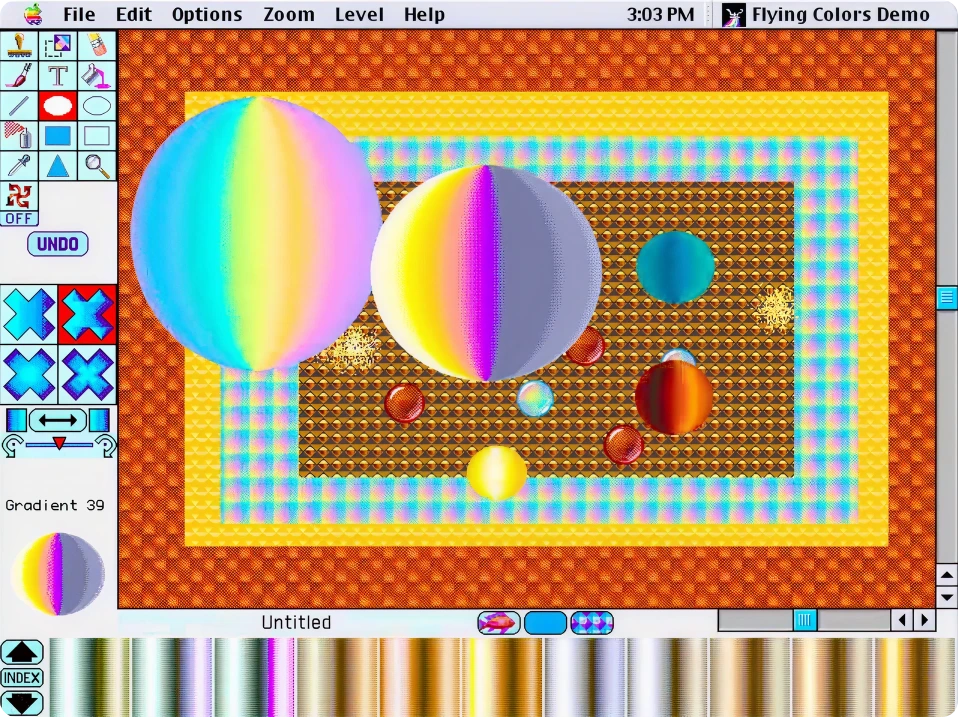
Lovable, Figma AI or v0 are doing exactly the same thing for design and AI, they are translation layers between a profession that thinks in screens and a technology that doesn't need screens to think. Translation and adaptation is comfortable (it always is), but it is also temporary. The danger is not that these tools exist, but confusing the bridge with the destination.
You might live under this bridge if...
- You evaluate AI tools on how well they integrate into your current workflow, rather than on what they allow you to stop doing.
- «AI for designers» sounds different to you than «AI for developers», and you are convinced that it is essential for your version to have a canvas.
- When a new design and AI tool is launched, your first question is about the interface, not what the model is actually capable of doing.
- You feel productive because AI has generated ten variations of a screen, even though you haven't decided if that screen should exist.
- You've never used an AI tool that didn't end the session with a visual artefact.
- The phrase «design without interface» sounds like a contradiction to you, rather than a possibility.
These are not aptitude issues, far from it, but the predictable form of a profession in full transition.
Why the canvas is the wrong starting point
A designer trained in visual tools sees every friction as a design to solve, a form to simplify, or a flow to shorten. But some frictions don't live in the interface, but in the logic, in a process that shouldn't exist or in an assumption that everyone inherited and no one questioned. These frictions are invisible to those who operate within a canvas, because the canvas already presupposes the form of the answer.
If you add a layer of AI over that canvas, what you get is An incredibly fast machine for generating answers to questions that no one has validated. The tool runs at full speed in the wrong direction and speed itself is mistaken for progress. The most expensive thing about Lovable or Figma AI isn't the subscription, but what they allow you to stop questioning, the moment the AI hands you a flawless screen, the conversation about whether the problem is screen-shaped is over. The artefact has silenced it.
Before taking out the canvas
Before any tool earns the right to enter the room, the problem has to survive a few questions that have nothing to do with the design.
| Ask yourself | What are you testing | Alert response |
|---|---|---|
| Whose friction is this, exactly? | If you have spoken to the person or an intermediary. | «The stakeholder He told me that...» |
| What happens if we don't build anything? | The real cost of the problem versus the assumed cost. | «It would be good to have it...» |
| Does this need to look good or just work? | Whether the value is in the interface or in the logic. | «Users expect a Dashboard…» |
| What's the minimum that shows this matters? | If you can validate without designing anything. | «We need the full flow first…» |
| If I remove the screen, what would be left? | If the screen is the product or just its casing. | «Nothing, it's all interface...» |
| Who's solving this already without tools? | If the current patch is the real deal. | «Nobody, that's why we need this…» |
If a problem cannot survive these six questions, no canvas-based AI is going to save it, it will simply give it a more presentable face.
Thinking outside and inside the canvas
When the design process focuses on the root, the screen ceases to be the unit of measurement and the final step to be executed. Two timelines usually emerge from the same point, and their destinations depend entirely on which mental model is present in the room.
| Within the canvas | Off the canvas |
|---|---|
| You hear the problem. | You hear the problem. |
| You open Lovable / Figma AI, or the tool of the moment | You stay in the conversation. |
| You're ordering a screen via a prompt. | You structure it as a friction. |
| The AI generates ten variations. | You question if an interface is needed. |
| You present something tangible. | You're asking an awkward question. |
| The client loves the demo. | The client reconsiders the premise. |
| You throw what you taught. | You throw what was needed. |
| Six months on: nobody's using it. | Six months later: the solution is ugly and indispensable. |
The left column is design on autopilot, where the canvas dictates everything and AI accelerates every wrong turn. The right column is harder to sell and to showcase in a portfolio; there's nothing to grab onto in the initial stages, only questions and discomfort.
Generating interfaces quickly isn't the mistake, it never has been; the mistake is from which surface you do it. If the surface is a canvas, you're asking the AI to generate answers in a format that was decided before understanding the question. The restriction isn't the model's intelligence, but the room you've locked it into.
Some principles for operating off the canvas
- Treat the canvas as a last resort, never the first.
- If you can describe the solution before the user has finished describing the problem, your mental model is too noisy.
- Validate friction with words and behaviours before validating it with pixels.
- The ugliest version that solves the real problem wins over the prettiest one that solves the assumed problem.
- When a design and AI tool generates something super cool, ask yourself at what point it convinced you to stop questioning it.
- Every interface is an admission that a simpler solution didn't exist. Earn that admission.
- Choose tools for what they allow you to stop doing, not for how they fit your current process.
The bridge and the destination
Discipline isn't about changing tools, but about recognising which are bridges and which are destinations. Right now, almost all «AI for designers» products are bridges: a comfortable way to introduce a new technology in a profession that is not ready to update its mental model. All will be discarded, just like schematic icons and carriage-shaped cars, not because they were bad, but because they were temporary by definition.
There are tools that adapt AI to your old process, and there are tools that adapt your process to what AI is capable of. The first type is comfortable and familiar, the second looks like the future. Right now, almost everyone is using the first and calling it «innovation.» The question isn't whether you're using AI; everyone is doing that. The question is whether your AI is trapped in your old mental model, or if you're finally going to let it break it.