← Blog from Guindo Design, Strategic Digital Product Design
AI in product design: much more than a fad
Artificial intelligence applied to digital products is not just a fad. It is a profound change in how we think about the relationship between users, processes and technology. While its “superpowers”, such as automation and data analytics, continue to amaze us, we have seen first-hand how misguided enthusiasm can lead to common mistakes: products that sound brilliant in presentation, but fail to connect with real users. Something similar to what happened with many apps in the early days after the arrival of the iPhone. Without a clear need or a thought-out strategy, AI often ends up adding complexity rather than value.
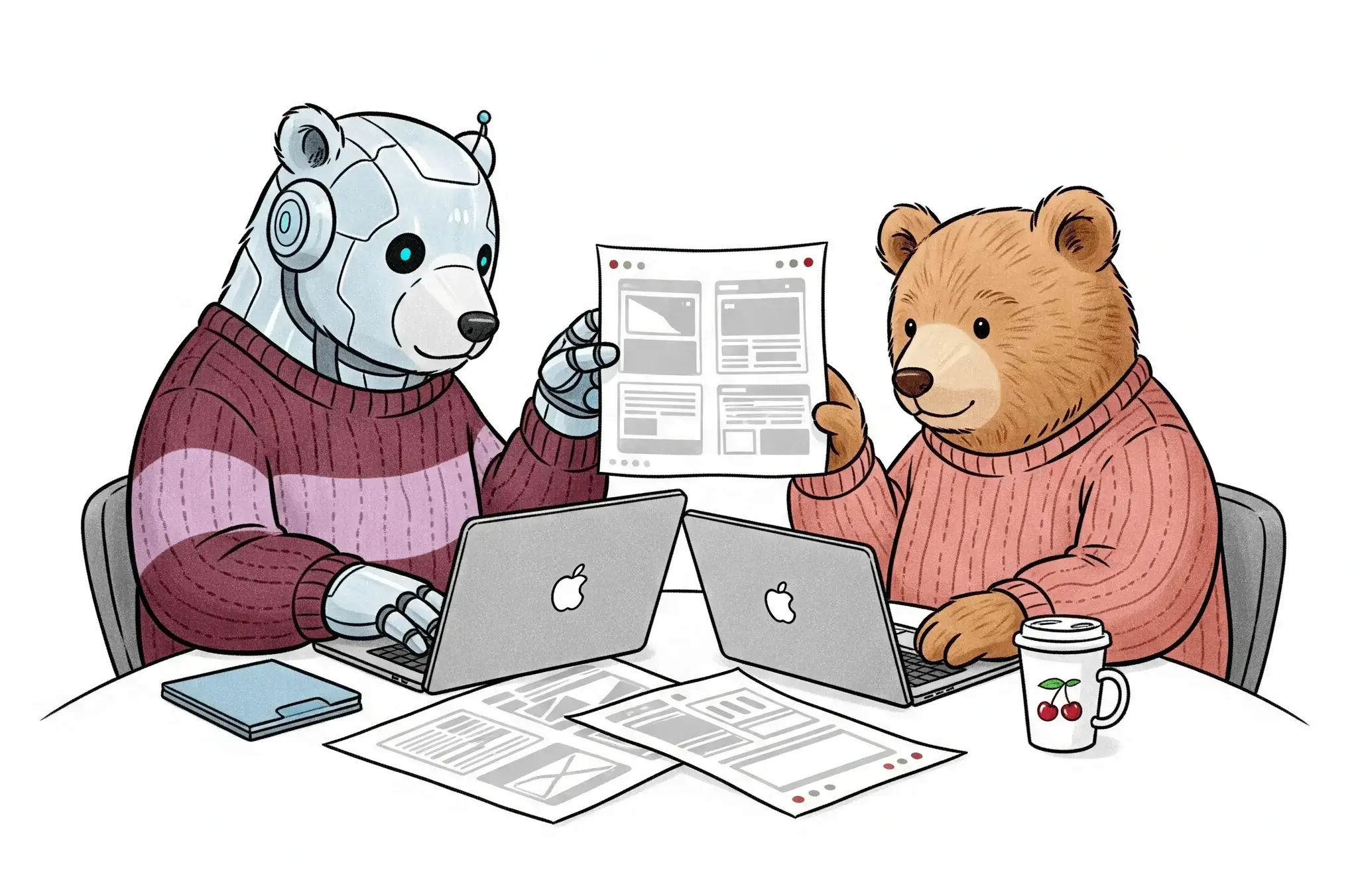
Therefore, the focus should not be on “putting AI” into everything for the sake of it. The real challenge lies in generate real value: understanding what issues are important to our users, how AI can improve their experience, and whether that has a clear impact on the business.
First the problem, then the technology
Integrating AI into a product doesn't start with seeing how we can apply the technology, it starts with understanding the problem. What does the user need to solve? What is the real obstacle? Until that is clear, thinking about AI (or any other technical solution) is getting ahead of the curve. Fads or market pressure should not lead the way; strategy needs to be based on concrete needs, not futuristic promises.
Some key questions we should ask ourselves from the outset:
- What real problem is my user facing?
- What do you need to achieve your objectives within the product, without unnecessary friction?
- Where in your workflow is there room to improve, simplify or transform something using AI?
These questions are not just a checklist: they are the filter that helps us to stay on track and avoid unnecessary or oversized solutions.
Having clear answers to these questions is key before talking about technology. Only then does it make sense to evaluate options: from manual or semi-automated solutions to advanced AI. What needs to be taken into account? Costs, time, maintenance, potential risks... but above all, the real impact on the user experience.
The key question to ask:
Will using AI in this process make the user more likely to succeed in their goals?
And is that going to have a real and measurable impact on the business?
«A sensible integration of AI is one in which the technology is the means, not the end, and each technical advance is justified by the concrete value it brings to the user and the organisation.” (NNGroup)
Guidelines for AI integration in digital products
After several projects at Guindo, designing and defining digital products with integrated AI, we have discovered some things that work and some things that don't work. Here I share some principles and best practices that I believe are essential to achieve a solid integration that really adds value.
AI that collaborates, not replaces
For AI integration to work in a product, it is not enough for it to be “smart” or efficient. It has to collaborate with the user, not replace them. The balance between automation and human control is what builds trust, facilitates adoption and multiplies the real value of the solution.
Stepalong is a good example of how to integrate AI and user as a team. AI automates the generation and translation of clear instructions adapted to different contexts, which was previously a long, manual and costly process. It can also create instructions from assembly images pdf and/or videos, which helps clarify doubts and ensures consistency in any part or process. But it always leaves control in the hands of the user: they can review, adjust or even create the instructions manually if they prefer.
“Big AI promises must be translated into well-defined tasks to avoid user frustration” (NNGroup).
Give the user control and the final say
One of the cornerstones for AI integration to work well is give the user control and the ability to validate what the system is proposing. This autonomy is key, especially in critical processes, complicated situations or when AI decisions have a lot of influence. An «undo» button is not enough; interfaces must invite review and allow the user to intervene when needed.
This moves the user from being a mere recipient of AI to an active contributor. When they know they have the final say, trust in the system grows and adoption becomes faster. This is the moment where AI efficiency meets intuition and human judgement.
M47Labs implemented an AI-enabled solution to automate the translation, verification and diagnosis of thousands of health insurance claims, They have achieved impressive efficiency. But they understood that in complex or ambiguous cases, human intervention is indispensable. Therefore, the system alerts the manager when a decision needs revision, allowing him or her to adjust or even override the outcome of the AI. Thus, the user is always in ultimate control, ensuring accuracy and fostering confidence in both insurers and their customers.
For the user to really trust and adopt AI, it is key that they can control and validate what the system proposes in a simple and natural way. Here some practices that facilitate such active collaboration:
- Direct editionAllow the user to directly modify AI-generated content, such as text or layout.
- Explicit feedback: Include “Like/Dislike”, “Helpful/Unhelpful” or “Correct suggestion” buttons to make it easy for the user to give feedback.
- Review history: Show the changes made by the AI and give the option to revert to previous versions.
- Suggested“ vs. ”automatic“ modes: Give the option for the AI to only suggest actions that the user must approve, rather than execute them directly.
- Adjustable parametersAllow the user to define the level of AI aggressiveness or the type of results he/she prefers.
Explains and contextualises the system's decisions
One of the biggest challenges in using AI is to avoid making it look like magic or a “black box”. It is essential that the systems explain their decisions in clear, user-friendly language, using metaphors or examples that the user understands. Thus, the user knows what is going on, why the AI makes certain recommendations and can trust the system more.
Shoptimus originally generated personalised shopping lists automatically, but many users did not understand how they were put together and why some products appeared. To solve this, the platform began displaying “smart suggestions” before products were added, so that the user could review and approve them. This simple change gave users visibility over the process, gave them more control and helped them better understand the recommendations. When the system explains what it does and leaves room for the user to validate, trust and adoption grows.
Transparency: show why
For users to trust AI, it is not enough to say what the system does, but to clearly explain why it makes certain decisions or recommendations. Transparency helps users understand the process, adjust their expectations and use the technology more safely and effectively.
This is especially important when decisions have a big impact or the results seem unexpected. Approachable and accessible language is key to making the user feel comfortable and confident.
Netflix not only personalises recommendations based on what you have seen, but also explains why it suggests certain content with messages such as “because you saw...” or “trends for you...”. Thus, users understand the logic behind the recommendations and can easily relate them to their interests. This transparency builds trust, makes using the platform more comfortable and increases the likelihood that they will continue to use the service.
Adapt to the moment, not just to the track record
The great advantage of AI in the design of digital products is its ability to anticipate what the user needs and adapt the experience in real time. The hyperpersonalisation goes beyond analysing past data; it interprets current context, recent behaviour and user intentions to deliver content and features that dynamically change and respond to the individual.
This creates authentic, user-centric digital experiences that adjust and evolve with the user's preferences. For example, Netflix not only recommends content based on what you've seen before, but also changes the interface and covers based on the time of day and your recent interests. Thanks to this personalisation, more than 80% of the content its users consume comes from these tailored recommendations. For design teams, this means creating flexible and transparent experiences, where automatic adjustments are never unpredictable or make the user feel out of control.
AI that respects: clear data, real control
Designing with AI cannot just be a technical or legal compliance issue. It needs to go further: explain how the data is used, give users choice, and ensure that the technology respects their diversity and choices.
Some key points:
- Transparency with the data: that the user understands what information is collected and for what purpose.
- Manual options: that there is always an alternative for those who prefer to have full control.
- Avoiding biasincluding diverse voices in development and designing for inclusiveness.
All of this builds trust and helps AI to be adopted naturally, without feeling intrusive or disconnected from people.
AI, the means. Solving needs, the end
Artificial intelligence is not the goal. It is a more powerful tool, yes, but only useful if it responds to a real problem. Its value lies in improving processes, facilitating decisions and, above all, generating experiences that the user understands, controls and wants to continue using.
Designing digital products with AI is an interesting challenge, but also a concrete opportunity: making technology work for people, not the other way around.
If your company or project wants to explore how to apply AI in a strategic, useful and user-centric way, I'm open to talk to you. The idea is not to “use AI just for the sake of it”, but to find together where it can really add value and how to do it.
References:
- NNGroup: Powered by AI is not a value proposition
- NNGroup: AI Superpowers
- NNGroup: AI in integration condens
- Netflix Tech Blog: Personalization
- Amplitude: What is hyper-personalization?
- Netflix Help Center - How recommendations work
- IBM: What is hyper-personalization?
- https://www.ibm.com/think/topics/ai-bias