← Blog from Guindo Design, Strategic Digital Product Design
Decision architectures and default options
Most of the time we don't know what we want until we see it. We construct our preferences from the alternatives we perceive in a given context, and small differences in the design of that context can have a significant impact on our decisions. This is why, it is essential to understand how the environment influences our choices.
In everyday life, this is clearly visible. For example, when car rental agencies include travel insurance by default unless we indicate otherwise, or when social networks ask for our email passwords by default to import our contacts, we are being pushed towards specific choices. These examples show that the way alternatives are presented can guide our choices, often without us consciously noticing it.
The concept of “decision architecture” has been explored in depth by Richard Thaler y Cass Sunstein in his book Nudge (“nudging”). According to the authors, the choice to design environments (whether physical or virtual) in order to influence decisions is a widespread and unavoidable phenomenon. Furthermore, they maintain a blog where they publish practical examples, connecting theory with concrete and current situations.
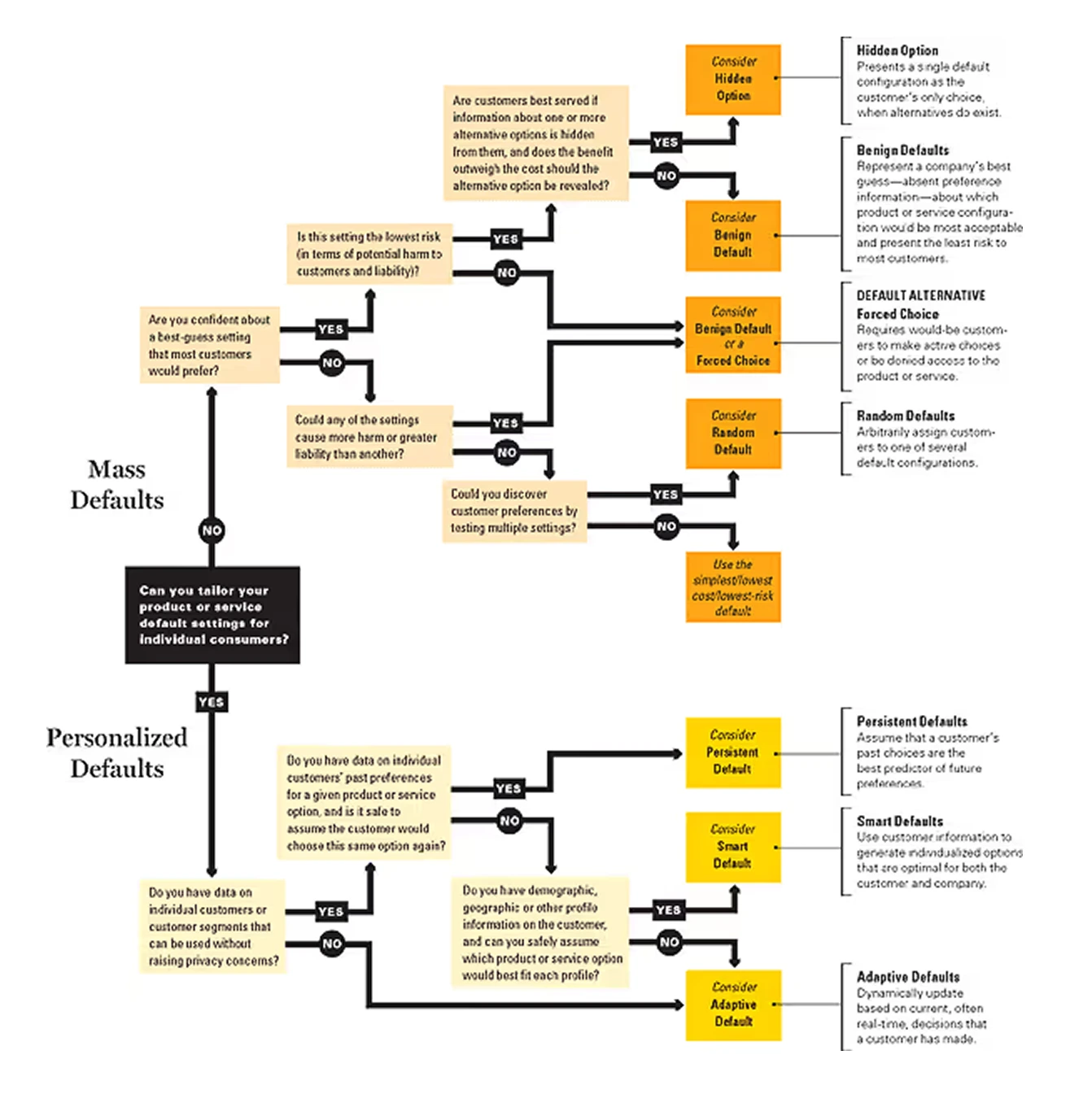
However, pushing the user towards an option or forcing a choice requires caution. If the user does not agree with the default option and alternatives are not clearly shown (or are hidden), the user may abandon the process. Therefore, transparency and clarity are essential elements in any decision architecture., They ensure that influencing is respectful and effective.
In practical terms, Decision architecture is the discipline of defining options and the context in which they are presented, with the aim of consciously influencing people's behaviour.. In order to design a good decision architecture and conceptualise how the default options should look and behave, the decision tree published in the December issue of the Harvard Business Review provides useful guidance that can be applied in a variety of contexts.
Ultimately, understanding how default choices affect our decisions and designing them carefully not only allows us to improve processes and experiences, but also invites us to reflect on the ethical responsibility of those who create them. The way we structure alternatives can transform the way people act, and doing so consciously makes the difference between influencing with respect or manipulating.