← Blog from Guindo Design, Strategic Digital Product Design
Glitch: the aesthetics of things getting out of control
We often become obsessed with solving a problem rationally, following methodologies to the letter and losing the peripheral vision of what is going on around us. However, sometimes accidents, unexpected failures or chance encounters can open up creative paths and suggest new solutions.
A glitch is, in essence, a brief error in a system. It usually describes a transient fault that resolves itself and is therefore difficult to detect or reproduce. The term is common in computing and electronics, very popular among video game players, but in reality it can be applied to any system: from a machine to a human organisation or even nature.
In digital entertainment, the glitch has gone from being an annoying bug to a source of value. It can enrich the product, break established rules and make it more fun or unexpected.
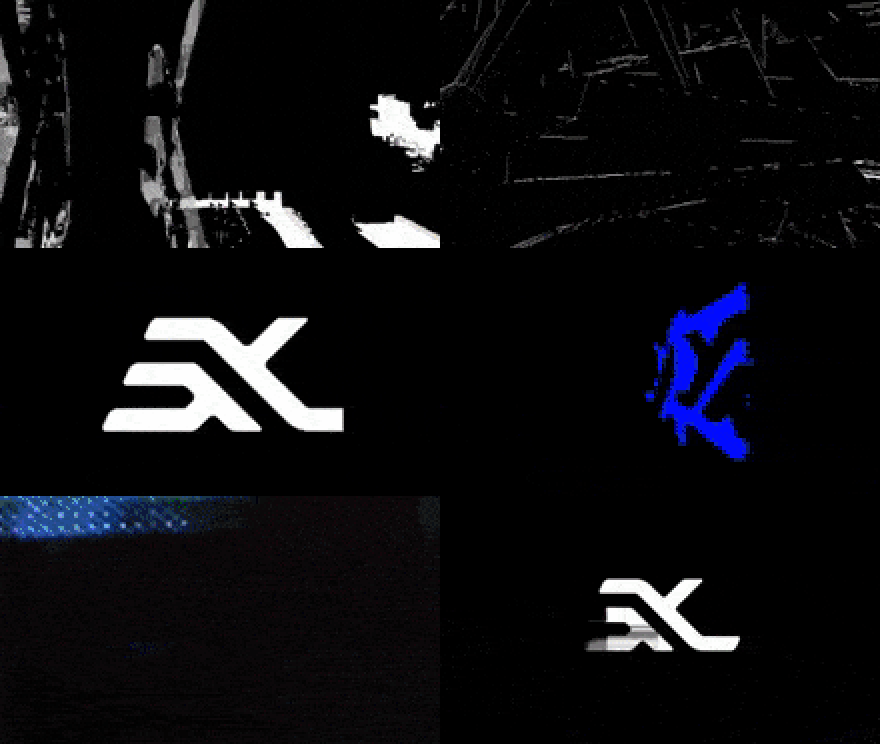
In visual design and motion graphics We found very clear examples: the bumpers of the 3XL channel visually exploited the typical errors of a loss of connection in online video, turning “imperfection” into style. In the same way, it would not be unreasonable to think that the creators of the video game Portal were inspired by glitches and easter eggs from other games (such as accidentally walking through walls) to turn that flaw into the core mechanic of a revolutionary experience.
Just as we laugh at human mistakes as a mechanism to bring us closer to each other, exploiting the failures of a system can be a way to humanise it.
«What strikes you now as odd, ugly or uncomfortable in a new medium will surely become its hallmark... It's the sound of failure: much of modern art is the sound of things getting out of control, of a medium pushed to its limits and breaking.»
Brian Eno, A Year With Swollen Appendices
Applied to digital design, this approach invites us not to see mistakes as an obstacle, but as an opportunity. The flaws, technical limitations or “imperfections” of a medium can become its most distinctive feature, the detail that gives it authenticity and personality.. The challenge is to detect these accidents, reinterpret them and transform them into design elements that connect with people.